
I lament the loss of fly fishing icon Flip Pallot earlier this year. If you haven’t read them yet, words from his family are available at flyfisherman.com, T. Edward Nickens writes about the man on gardenandgun.com, and hatchmag.com has a nice piece as well.
For my tribute, I’d like to make the argument that The Walker’s Cay Chronicles is one of the greatest fly fishing shows of all time. My thesis is that the use of film editing, sound editing, and staging combined to produce a cinematic experience unlike conventional documentaries. Flip’s charisma and the emphasis on storytelling generated a captivating television show that we’re now able to enjoy online.
I’ll use the series first episode to illustrate my point. All of the episodes online are compiled in this playlist for your viewing pleasure.
If you want to play along at home, watch the first four minutes.
Below I will do a shot by shot analysis that shows how different The Walker’s Cay Chronicles is from other fishing content. While I thoroughly enjoy modern fly fishing videos, I still get a kick out of some of these oldies but goodies. And I believe that today’s filmmakers could learn a thing or two from these grainy old tapes. We start at 2 minutes and 57 seconds in….
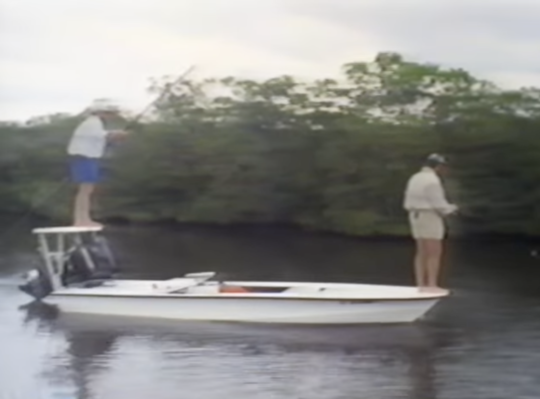
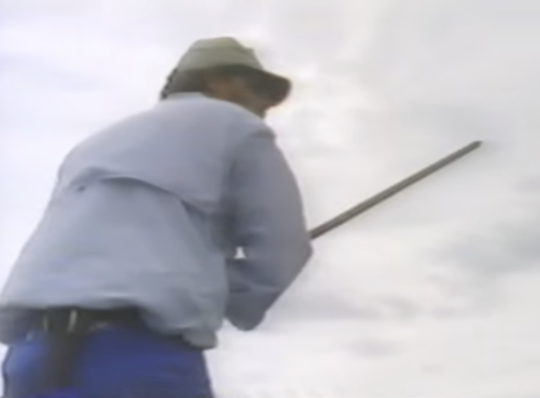


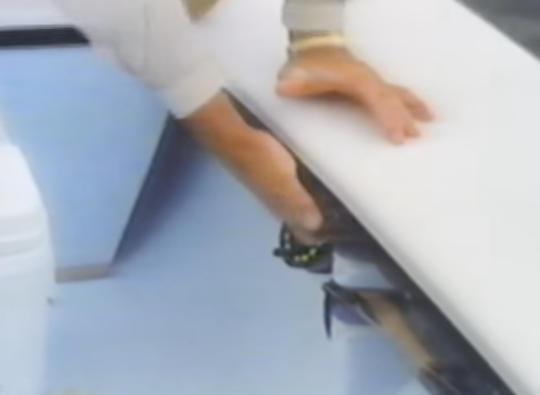
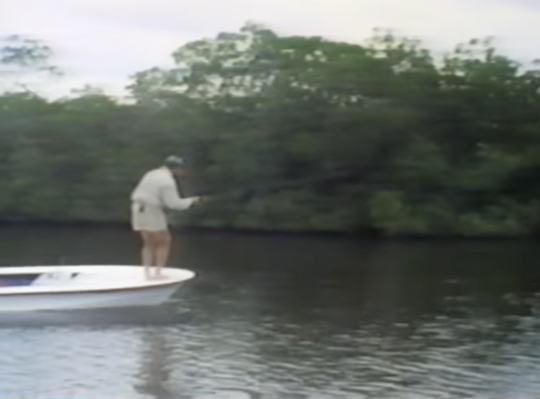
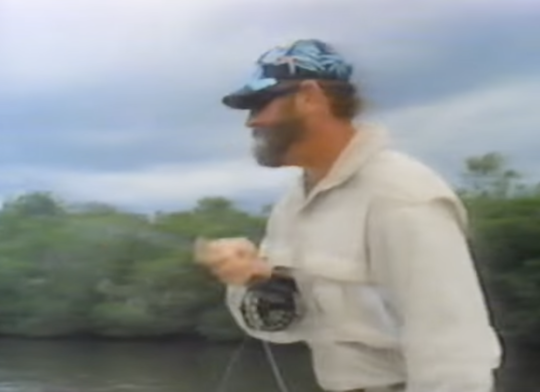
My assessment is that shots 1, 3, 4, and 6 were all taken by a cameraperson in a different vessel, and shots 2, 5, and 7 were taken by a cameraperson in the skiff. But why is there no cameraperson visible in shot #1? Based on my thesis, clever staging and continuity editing produce the illusion. I do not believe that any special effects or sophisticated post-production techniques were used.
Shot 5, if not all of shots 1-6, could have been taken after this fish was hooked. The film crew could have poled along the same mangrove flat and then had Flip cast to where he had just hooked the fish. The seamless sound editing augments the engaging experience of watching Flip cast from far away then hook a fish up close.
These seven shots only comprise about one minute and 12 seconds of film, but I believe that as many as six of them were staged. The only shot that includes a fish being hooked is #7. The previous six could have been taken after the fish was hooked. This would have taken a lot of planning, foresight, editing, and a vision to tell as compelling a story as possible while maintaining the illusion of no cameraperson being present.
Watch some of The Walker’s Cay Chronicles and let me know what you think. Is the show really compelling or does it feel dated? Do you enjoy the cinematography or is the grainy video quality distracting? Is the magic of cinema real in this case?
I still believe that either Flip or one of the shows crew, whether it was a producer, cinematographer, or editor, was the driving force behind fostering such a mesmerizing cinematic experience. Walker’s Cay is very much not a documentary or how-to series, even though it features some of those elements. It’s more of an action packed travelogue where you feel like you are part of the action. In my opinion, that is due to the clever editing and shooting styles that transform this outdoors show into true theater.
In closing, I’ll just stay that I hope I get to watch another fly fishing show some day that puts so much effort into cinematography, staging, and continuity editing when it comes to portraying the hunt, the catch, and the release. There are so many incredibly talented filmmakers today taking their talents to the water, and I’d like to see some of them dare to recreate the sensation of Walker’s Cay Chronicles.

Written by: Dave Hyde, Watertown, Mass.
Find me on Instagram, Facebook, and YouTube

Discover more from BlogFlyFish.com
Subscribe to get the latest posts sent to your email.
Honestly haven’t watched any of these programs, but he and Lefty were great in person. Even my wife enjoyed their presentations at LLBean Fishing weekends!
Thanks for posting. This is great stuff!
I appreciate it. Good to hear from you Dick. I hope you had a good year of fishing. Are you still getting out on the North Shore in The Double Haul?
I thoroughly enjoyed that video. I’m not sure I’ve ever seen that show before, but it certainly was spellbinding.
I think the cameraman laid down on the floor of the boat when they didn’t want him to be seen in the picture. IMHO
Thanks for sharing this, Dave.
Hadn’t thought of that! I like the theory! Good to hear from you Bill. Glad you enjoyed.